Tech-Dry Solid Silane Protects High Value Port Structures

As clean energy gains momentum, infrastructure durability has become a strategic priority, especially in coastal zones where saltwater, moisture, and industrial activity accelerate concrete degradation. One site at the forefront of this transition is the Port of Hastings, located in Victoria, Australia. In 2022, the port made headlines as the docking site for the Suiso Frontier, the world’s first liquid hydrogen tanker, marking a milestone in hydrogen export logistics between Australia and Japan.
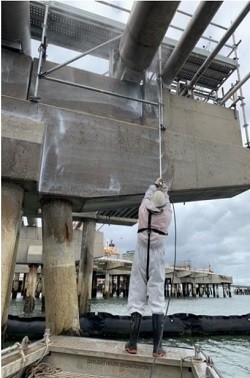
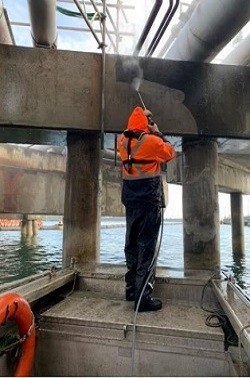
Beneath this headline moment lies a quieter, equally vital story: the long-term protection of the port’s marine infrastructure. To ensure the resilience of key assets, Tech-Dry Building Protection Systems supplied its advanced silane-based concrete sealer, Solid Silane, for application across three high-value jetties—Crib Point, Long Island Point, and Stony Point.
The Challenge: Marine Environments and Concrete Decay
Marine infrastructure endures constant exposure to moisture, salt, and temperature shifts. Over time, these elements penetrate concrete, allowing chlorides to reach the steel reinforcement. This triggers corrosion, cracking, and structural instability, raising safety risks and inflating maintenance costs.
For ports handling heavy industry and global trade, this isn’t just a technical challenge, it’s a strategic risk. With its growing role in hydrogen logistics and manufacturing exports, the Port of Hastings needed a solution that delivered long-term durability, environmental safety, and cost efficiency.
The Solution: Solid Silane
Tech-Dry’s Solid Silane is a high-performance silane cream designed specifically for deep penetration into concrete substrates. Unlike traditional liquid sealers, Solid Silane’s thixotropic (non-drip) formulation allows for precise, controlled application, especially important in sensitive marine environments where runoff can contaminate surrounding waters.
Following application, Solid Silane migrates into the concrete matrix and reacts to form a hydrophobic barrier. As a result, this barrier significantly reduces water absorption and chloride ingress, helping to prevent corrosion of embedded steel reinforcement. Ultimately, the outcome is a durable, invisible shield that preserves structural integrity without altering surface appearance.
Global Relevance and Proven Track Record
Solid Silane isn’t just trusted in Australia, it’s been used in major infrastructure projects across Asia and beyond. One notable example is the Tsing Ma Bridge in Hong Kong, where Solid Silane was first applied in 2009. The bridge, which carries both road and rail traffic, endures intense environmental stress and remains a testament to the product’s durability.
From bridges to industrial facilities, Solid Silane offers a versatile, low-maintenance solution for concrete protection. Its performance has been validated in diverse climates and construction contexts, making it a go-to choice for engineers and asset managers worldwide.
Environmental and Technical Advantages
In marine applications, environmental stewardship is non-negotiable. Solid Silane’s formulation reflects Tech-Dry’s commitment to sustainable building practices:
- No runoff or leaching, protecting aquatic life and nearby ecosystems
- Low VOC emissions, supporting healthier work environments
- Deep substrate penetration, without forming a surface film or altering appearance
These features align with global standards for environmentally responsible construction and long-term infrastructure care.
A Model for Sustainable Infrastructure Protection
The Port of Hastings is poised to play a key role in Australia’s hydrogen export strategy, serving as a launch point for clean energy shipments to global markets. As such, its infrastructure must be resilient, not just to environmental stressors, but to the demands of evolving industrial operations.
Port authorities chose Solid Silane to future-proof critical assets. This proactive move strengthens long-term resilience. The sealer’s performance helps keep jetties safe, stable, and operational as hydrogen logistics expand. This investment in durability also reflects broader trends in infrastructure planning: where technical innovation, environmental responsibility, and economic foresight converge.
Whether you’re managing marine terminals, industrial facilities, or transport networks, Tech-Dry’s Solid Silane offers proven performance in the world’s most challenging environments. Contact our team today to explore tailored solutions, request technical specifications, or schedule a consultation with one of our specialists.