
Moisture Protection for Rammed Earth Walls
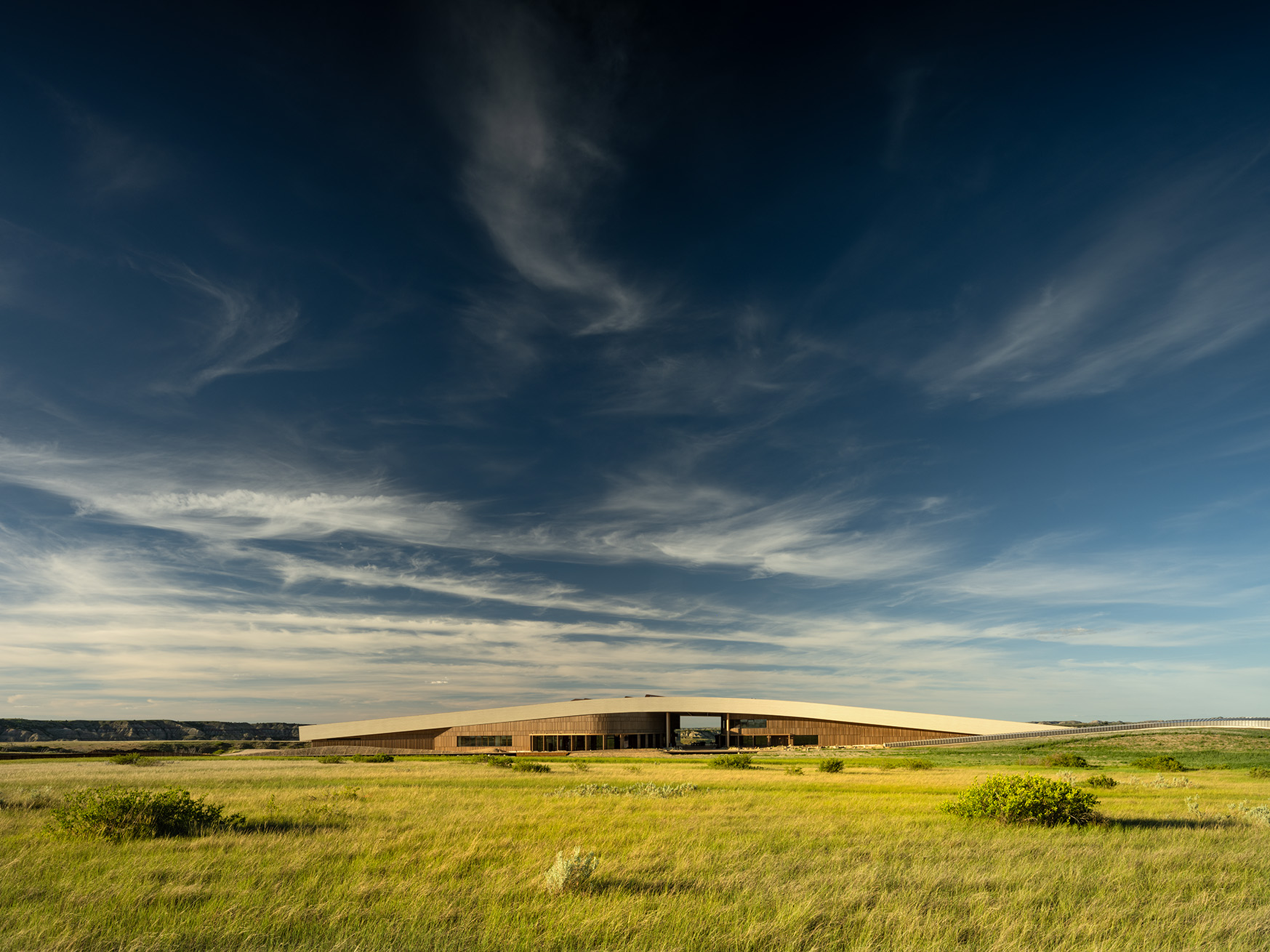
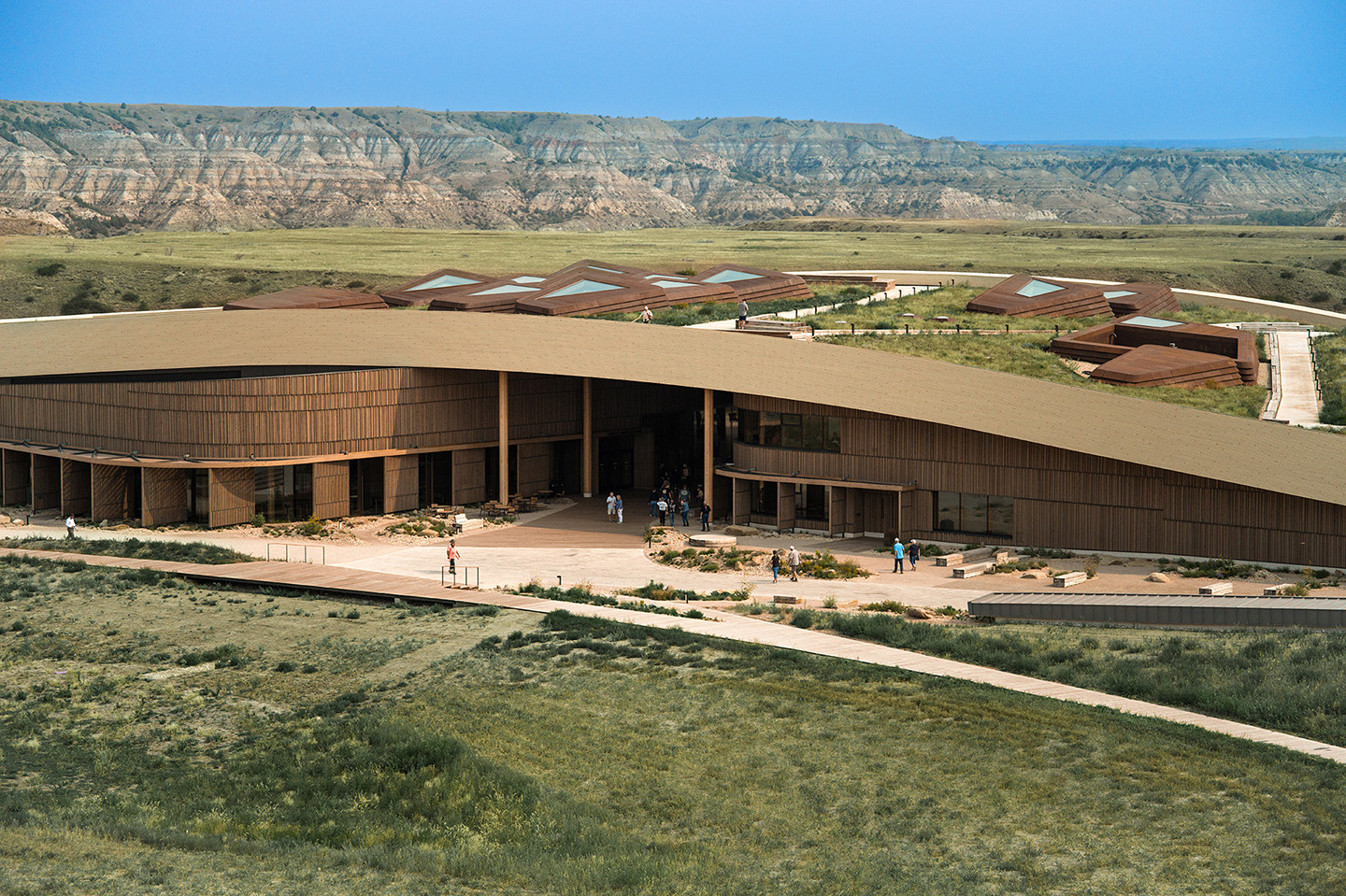
The Theodore Roosevelt Presidential Library opened on July 4, 2026, America’s 250th anniversary, on a butte in the North Dakota Badlands. Designed by Snøhetta under the principle “The Library is the Landscape”, the building rises from the terrain like a natural landform. Its 121,000-square-foot living prairie roof is fully walkable and accessible, with views over the National Park, the Little Missouri River valley and, on a clear day, toward the country around Roosevelt’s Elkhorn Ranch.
Rammed earth is central to the design. The Library’s two-foot-thick walls are built from local soil, sand and gravel, and their layered striations echo the geology of the surrounding Badlands. Timber complements the earthen elements. The sloping roof is supported by a mass-timber and steel hybrid structure, with timber left exposed in the large breezeway that links the two main indoor spaces. Wood exterior cladding and reclaimed regional wood round out a natural material palette chosen to sit quietly within the prairie landscape.
The challenge
The rammed-earth walls had to meet several demands at once.
Exposure
Medora has a cold semi-arid climate: warm summers and cold winters with low temperatures well below freezing, and strong wind year-round. Rain is infrequent, but heavy summer thunderstorms, winter snow and blizzards mean the walls face intense bursts of moisture rather than steady rain. Earthen walls in this setting need lasting resistance to water absorption, efflorescence and moisture-related staining.

Images courtesy: Theodore Roosevelt Presidential Library
Appearance
Although the walls are nonstructural and do not support the roof, they still play an important role in the building’s performance and character. The mass-timber and steel structure carries the roof load. Meanwhile, the walls provide thermal mass, absorbing heat during the day and releasing it slowly to help regulate indoor temperatures. Their layered surface also reinforces the building’s connection to the surrounding landscape. Consequently, any protection system had to preserve this natural, geological finish.
Longevity
A presidential library is built to last generations. Wall protection needed to be durable for the life of the building, not a surface treatment requiring regular reapplication.
Sustainability
The Library is pursuing full Living Building Challenge certification, widely regarded as the world’s most rigorous sustainable building standard. Its “Four Zeros” framework targets zero energy, zero carbon, zero water and zero waste:
Zero Energy: The rammed-earth walls provide thermal mass, the living roof helps moderate the interior, and on-site solar and geothermal systems supply renewable energy.
Zero Carbon: The material palette prioritises low-carbon and local materials, including mass timber, reclaimed regional wood, low-carbon concrete and rammed earth made from local soil.
Zero Water: Rainwater harvesting, reuse of non-potable water, low-flow fixtures and wetlands on the living roof support the site’s natural hydrology.
Zero Waste: Construction and operational waste streams are minimised through recycling, composting, and circular material strategies.
If certified, the Theodore Roosevelt Presidential Library will be the only Living Certified presidential library and the largest Living Certified cultural institution in the world.
The solution
The rammed-earth mix incorporated Tech-Dry® Plasticure, supplied by Aussie Built Supply, the exclusive U.S. provider of Tech-Dry products. Winn Construction and Earth Wall Builders constructed the walls under the management of JE Dunn.
Plasticure is a water-repellent silicone admixture for cement-stabilised earth. Added during mixing, it provides full-depth water repellency that extends throughout the wall rather than sitting on the surface. As a result, the protection cannot wear off and the wall retains its natural finish.
In Tech-Dry’s testing, Plasticure reduces water absorption and efflorescence by over 80%.

Images courtesy: Theodore Roosevelt Presidential Library
The result
The Library’s rammed-earth walls combine local materials with integral moisture protection. Plasticure provides water repellency throughout the full depth of each wall, helping it withstand an exposed prairie climate over the long term. The admixture preserves the tactile, striated surface that defines the building’s character.
The walls support the Library’s broader sustainability strategy. Their thermal mass helps regulate indoor temperatures. The living roof and on-site solar and geothermal systems further improve building performance. The project also uses a low-carbon material palette that includes mass timber, reclaimed regional wood and low-carbon concrete.
Why Plasticure for rammed earth?
- Integral protection: water repellency runs through the whole wall, not just the surface.
- Efflorescence control: reduces water absorption and efflorescence by over 80%.
- Natural finish: there is no surface film, so the earth’s texture and colour are preserved.
- Built-in from day one: added during mixing as part of the construction process.
Talk to the Tech-Dry team
Specifying rammed earth or stabilised earth for your next project? The Tech-Dry team can help you choose the right admixture or surface treatment for your wall system. Explore Plasticure, contact Aussie Built Supply in the U.S., or call our Melbourne office on +61 3 9699 8202.
 Images courtesy: Theodore Roosevelt Presidential Library