Protecting Rammed Earth Architecture with Tech Dry Plasticure
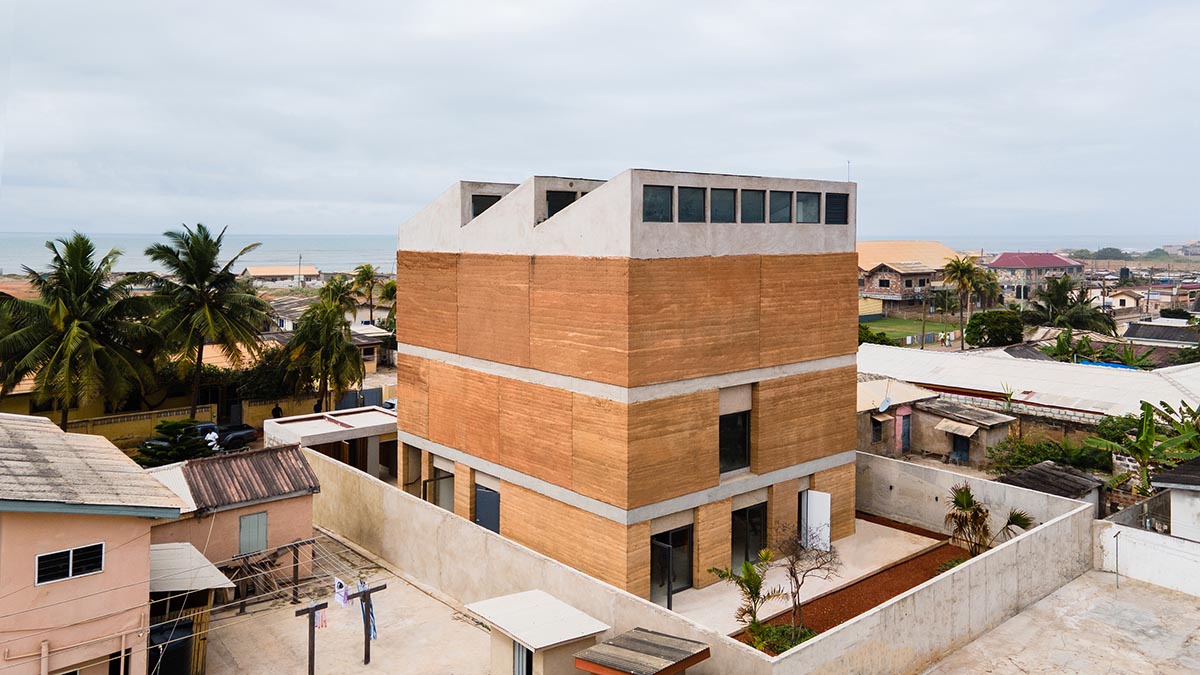
Located on the Osu waterfront in Accra, Ghana, dot.ateliers is a landmark creative hub designed by Adjaye Associates for the Amoako Foundation. Conceived as a hybrid of artist studios, exhibition spaces, and community‑oriented cultural infrastructure, the project demonstrates how contemporary architecture can be deeply rooted in local materials while enhanced through targeted technological innovation. A defining feature of the building is its sculptural rammed earth façade, an expressive, monolithic envelope that anchors the structure to its coastal context. To ensure long‑term durability in Accra’s challenging climate, the construction team integrated Tech‑Dry’s Plasticure, a high‑performance water‑repellent admixture formulated specifically for stabilised earth systems.
Project Context
dot.ateliers sits within a dense urban fabric overlooking the Atlantic Ocean and the historic Osu Castle. The building’s program—artist residencies, workshops, a gallery, and public gathering spaces—required a material palette that was both environmentally responsible and culturally resonant. Rammed earth offered a compelling solution: it is low‑carbon, locally sourced, thermally stable, and visually connected to Ghana’s landscape.
However, the coastal environment presents significant risks for unstabilised or inadequately protected earth structures. High humidity, salt‑laden air, seasonal rains, and fluctuating moisture levels can lead to:
- Surface erosion
- Efflorescence
- Structural weakening
- Staining and discolouration
- Reduced thermal performance
To address these challenges without compromising the authenticity of the material, the project team incorporated Plasticure into the rammed earth mix.
Material Strategy: Why Plasticure
Plasticure is a water‑based, non‑hazardous admixture designed to reduce water permeability in stabilised earth materials. Unlike surface coatings, which can wear away or alter the appearance of natural substrates, Plasticure works from within. When added during mixing, it chemically bonds to the earth matrix, creating a hydrophobic structure throughout the entire wall.
For dot.ateliers, this internal protection was essential. The building’s rammed earth façade is not decorative, it is structural, climatic, and symbolic. It needed to withstand decades of exposure while maintaining its tactile, expressive qualities.
Key performance benefits Plasticure delivered include:
- Significant reduction in water absorption, helping prevent moisture ingress
- Improved resistance to efflorescence, crucial in coastal environments
- Enhanced durability and surface stability, reducing erosion over time
- Preservation of natural colour and texture, maintaining the architectural intent
- Compatibility with stabilised earth mixes, ensuring seamless integration into local construction processes
These advantages allowed the design team, including Earth Structures and Hive Earth, to push the boundaries of rammed earth construction without compromising longevity.
Architectural Expression and Environmental Performance
The building’s form is defined by three stacked volumes wrapped in a double‑envelope rammed earth façade. This envelope performs multiple roles:
- Thermal regulation: Rammed earth’s high thermal mass helps stabilise interior temperatures, reducing reliance on mechanical cooling.
- Acoustic comfort: The dense walls create quieter, more focused studio environments.
- Cultural resonance: The material connects the building to Ghana’s vernacular construction traditions.
- Visual identity: The façade’s stratified tones and sculpted apertures give dot.ateliers its distinctive presence.
Plasticure’s role was to ensure these benefits were not undermined by moisture‑related degradation. By strengthening the earth mix from within, the admixture supports the building’s environmental performance and preserves its architectural clarity.
Sustainability and Local Impact
The project’s sustainability strategy prioritised low‑carbon materials, local labour, and regionally sourced aggregates. Plasticure aligned with this ethos:
- It is water‑based and non‑toxic, supporting safe on‑site handling.
- It reduces the need for additional protective coatings, lowering maintenance demands.
- It extends the lifespan of earth structures, improving whole‑of‑life sustainability.
By enabling a more durable rammed earth system, Plasticure helped the project demonstrate how African architecture can embrace local materials while meeting contemporary performance expectations.
dot.ateliers stands as a compelling example of how tradition and innovation can coexist in modern architecture. The project’s rammed earth façade is both a cultural statement and a technical achievement, one made possible through the integration of Tech‑Dry’s Plasticure. By enhancing moisture resistance and long‑term durability, Plasticure ensured that the building’s expressive earth walls could thrive in Accra’s coastal climate without compromising their natural beauty.
The result is a resilient, low‑carbon, and deeply place‑specific piece of architecture that supports Ghana’s creative community while showcasing the potential of advanced moisture‑management technologies in sustainable construction.