
The Ultimate Stress Test: Salt Retarder in a Flooded Basement
A recent brickwork restoration in Melbourne provided an unexpected real-world look at how a salt-retarding render additive can perform under severe moisture exposure. The work, carried out by James Flint of Bricklaying Victoria, involved repairing brickwork around a fireplace and arch before applying a sand-and-cement render with Tech-Dry’s Salt Retarder. Weeks later, the property flooded, creating an unplanned test of the repair.
A repair followed by a major flood
Flint completed the repairs and applied the render using Salt Retarder, a water-repellent admixture designed to inhibit the permeation of salts and water through cement/sand renders. Two to three weeks after the job was finished, the basement flooded to ceiling height. According to Flint, the space was fully submerged. Fresh render is often vulnerable in these conditions because it has not yet had time to fully cure or undergo repeated wetting and drying cycles. Even so, Flint reported that the repaired brickwork and render showed no visible deterioration after the flood.
How flooding usually affects new render
Flooding accelerates the movement of soluble salts within masonry. When walls become saturated, the salts dissolve and migrate into new render. As the structure dries, these salts crystallise, often leading to:
- surface efflorescence
- blistering or flaking
- softening or crumbling of the render surface
These issues are common even in older, fully cured renders. For newly applied render, the risk is significantly higher.
The function of Salt Retarder in the mix
Tech‑Dry’s Salt Retarder is formulated to limit the movement of salts through cementitious materials. By reducing salt mobility, the additive helps stabilise the render during wetting and drying cycles. While it is not a complete waterproofing agent, its effect on salt behaviour can improve durability in environments where moisture and salts are present.
In this case, the flood created an extreme version of the wet‑dry cycle that typically causes salt‑related failures. Instead of gradual exposure over months or years, the render experienced full saturation. The absence of visible damage shows that the treated render maintained its integrity under conditions far harsher than those normally encountered in most repairs.
Flint noted that his work was “untouched” after the flood and attributed the outcome to the inclusion of Salt Retarder, adding that he uses the product in all his mortar mixes.
Implications for moisture‑prone environments

The incident highlights the challenges of working with older brickwork, particularly in areas where salts are present or moisture exposure is likely. It also provides a practical example of how a salt‑resistant render performed when subjected to sudden and severe saturation.
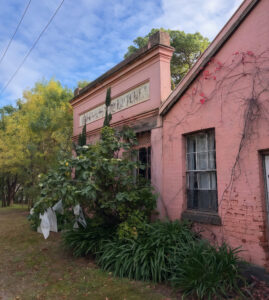
The former butcher’s shop and now private residence in Carisbrook, Victoria, offers a real‑world reference point.