
Polishing Liquid (Export Only)
- Home
- Products
- Seal Driveway and Garage Floor with Penetrating Sealers
- Polishing Liquid (Export Only)
Description
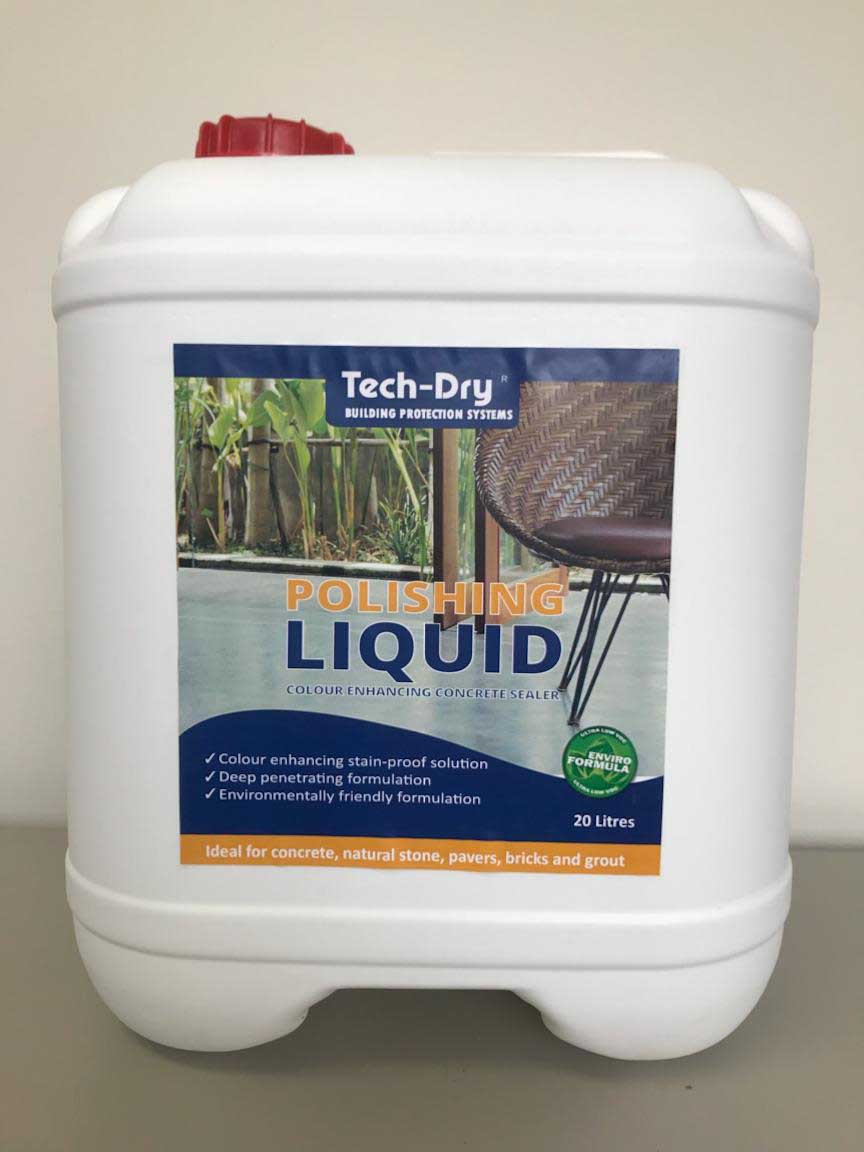
Polishing Liquid is a water‑based oil‑ and water‑repellent sealer for masonry substrates. It works as a penetrating, stain‑resistant treatment. It does not change the surface appearance or reduce vapour permeability. The sealer provides strong resistance to common stains, including food, wine, tannin, and oil. Polishing Liquid is environmentally friendly, contains no organic solvent, and offers a practical alternative to solvent‑based stain‑resistant sealers.
Key Features
- Good resistance to oil or water-based stains
- Reduce water absorption and algae/mould growth
- Penetrates and permanently reacts with masonry
- Offer durable protection and wearing resistance
- Non-film forming natural finishes
- No change of surface appearance
- Suitable for a range of masonry materials
- Applied using brush, roller or low-pressure hand spray
- Water-based environmentally friendly technology with no VOC
Recommended Uses
Polishing Liquid suits all masonry materials, including natural stone, concrete blocks, pavers, driveways, clay bricks, terracotta, tiles, and grouts. Because it is water‑based, it has limited penetration on dense substrates and performs best on permeable masonry. It can still provide reasonable water repellence and stain resistance on dense materials. For very dense substrates, a Tech‑Dry solvent‑based stain‑resistant sealer may offer better performance.
Test & Performance
Four popular masonry substrates including pressed concrete paver and imported sandstone as the permeable substrates, and imported granite and imported bluestone as the dense masonry were selected for performance testing. Food dye, red wine, and olive oil were used as stains for staining tests.
Water Absorption
The capillary water absorption according to DIN 52617 was shown in the Figure 1. The result indicates that the capillary water absorption of all treated substrates was significantly reduced.

Figure 1: Capillary Water Absorption
Penetration Depth:
The penetration depths of the treated substrates are listed in Table 1. Being a water-based formulation with limited penetration ability, Polishing Liquid achieved reasonable penetration depths to all treated masonry substrates, except for very dense bluestone.
Table 1: Penetration Depth
| Penetration Depth | |
| Pressed Concrete | 10-20 mm |
| Imported Sandstone | 1.5 mm |
| Imported Granite | 2 mm |
| Imported Bluestone | >0 mm (almost nil) |
Stain Resistance
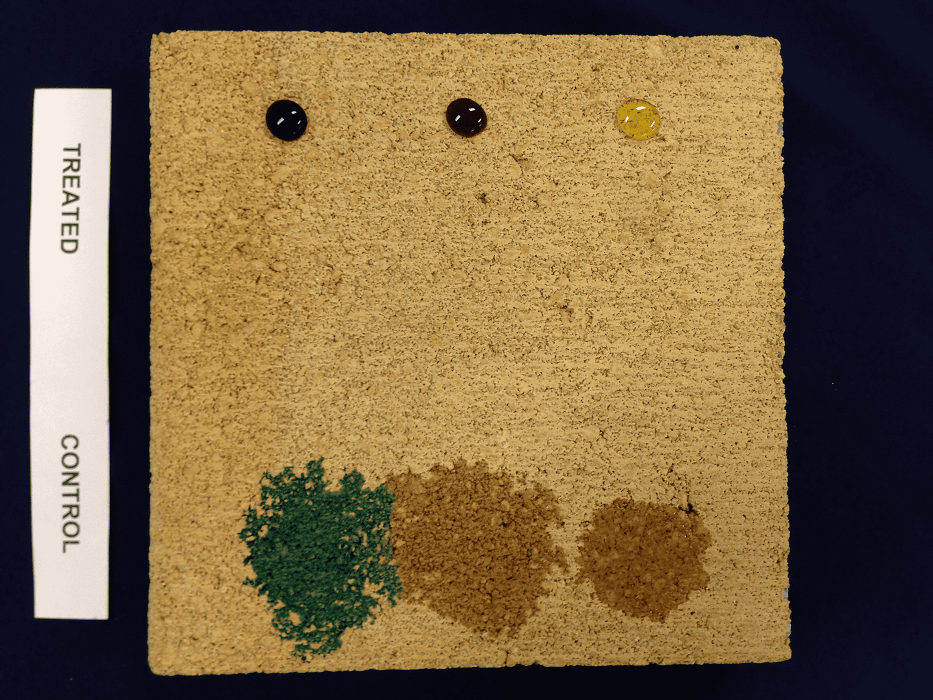
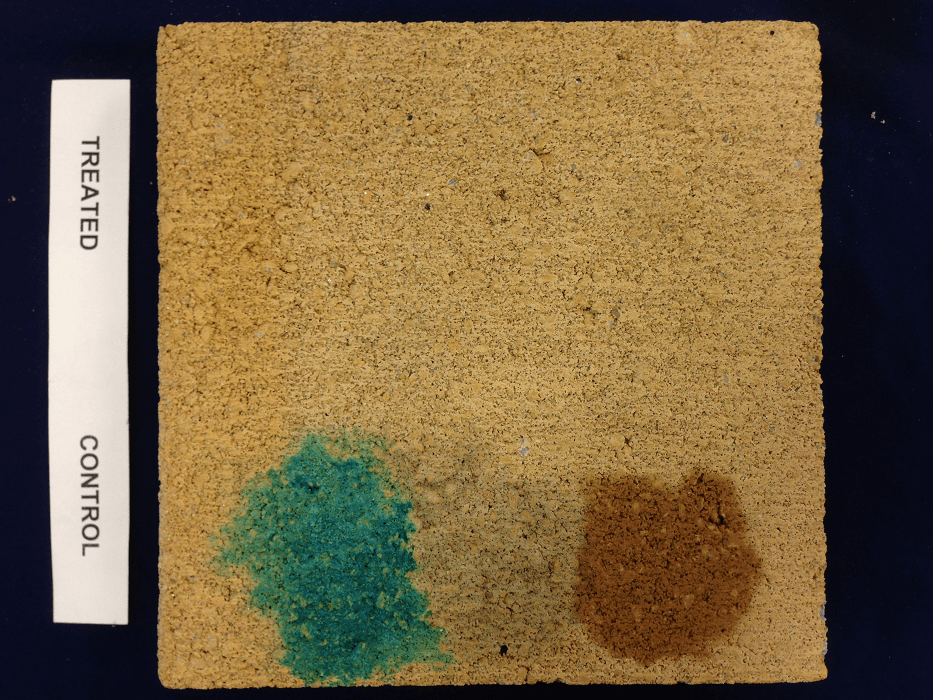
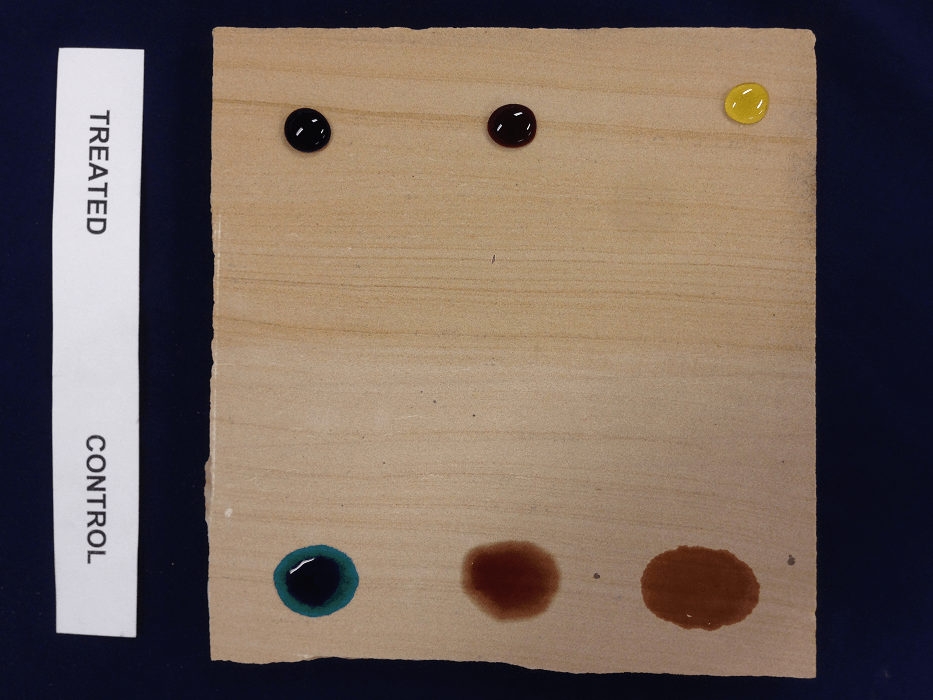
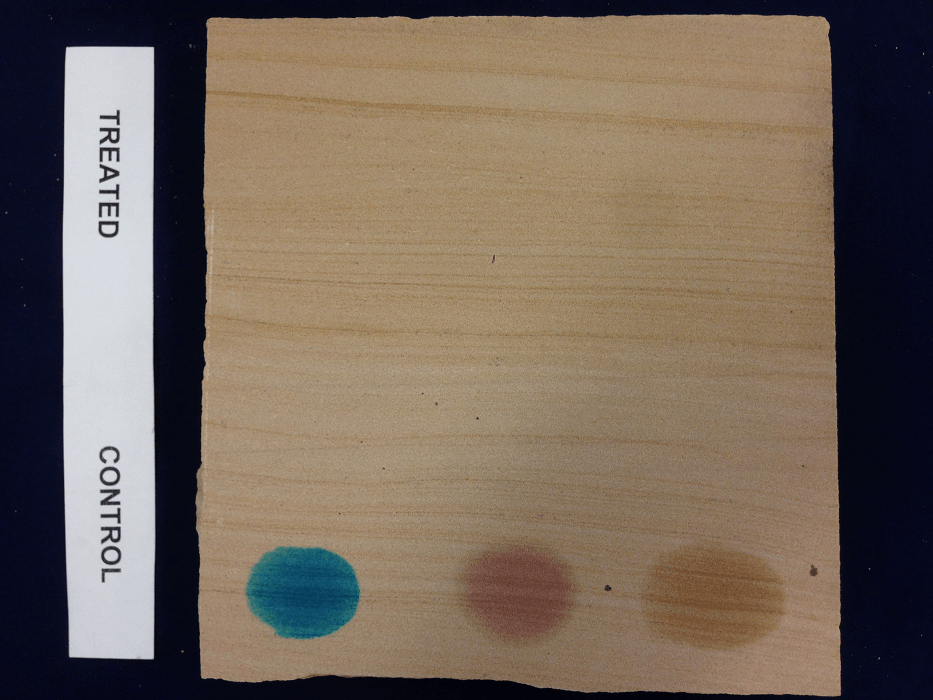
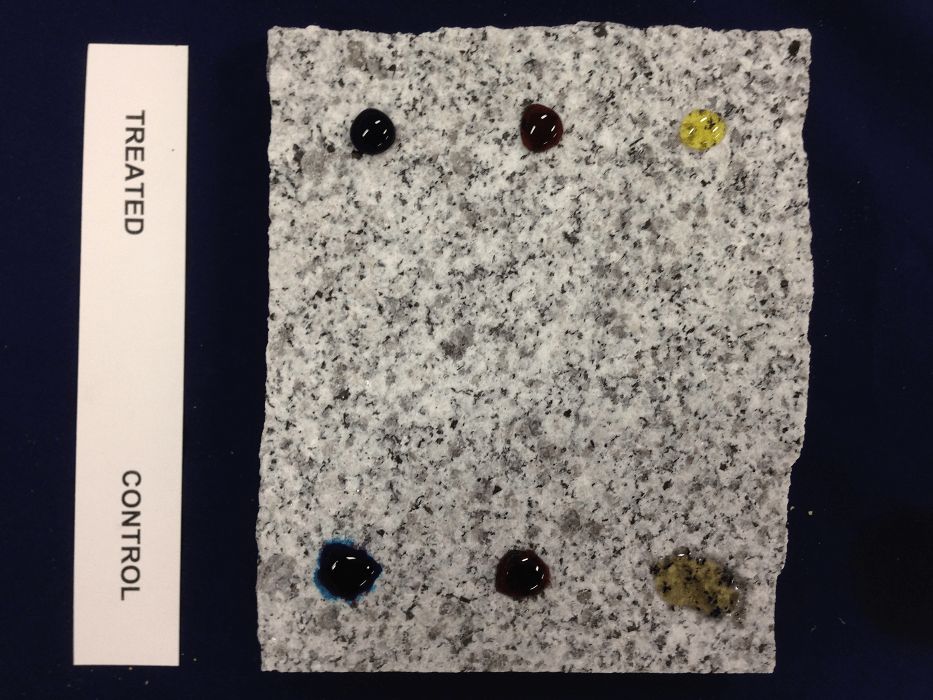
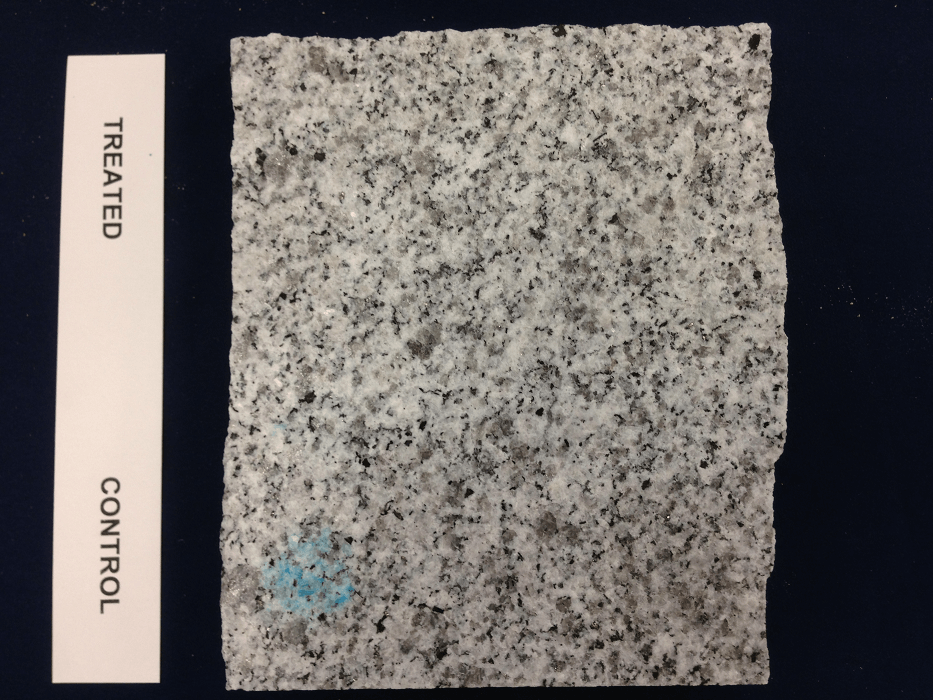
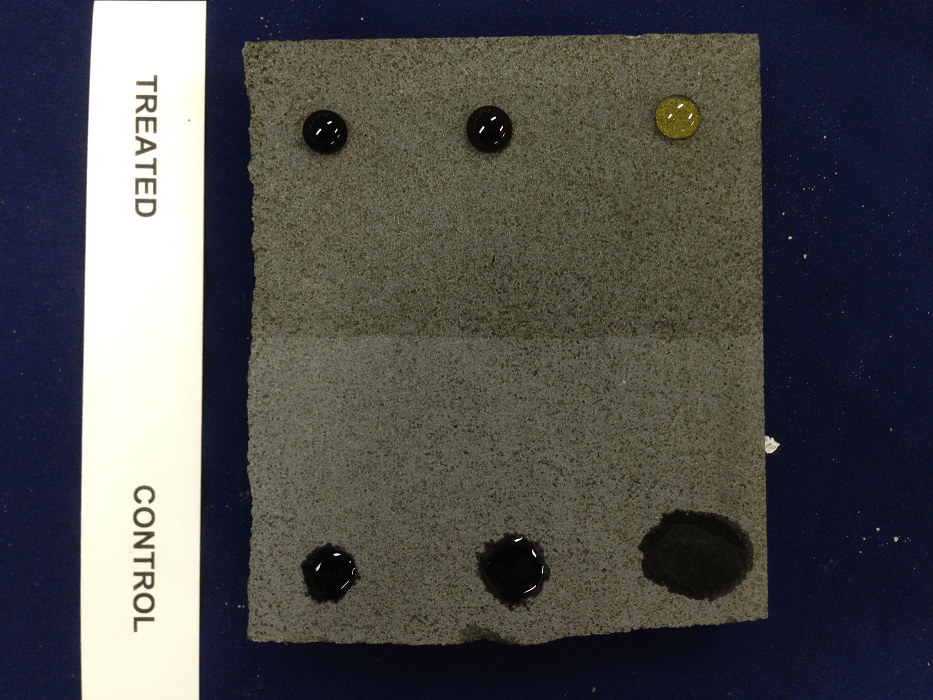
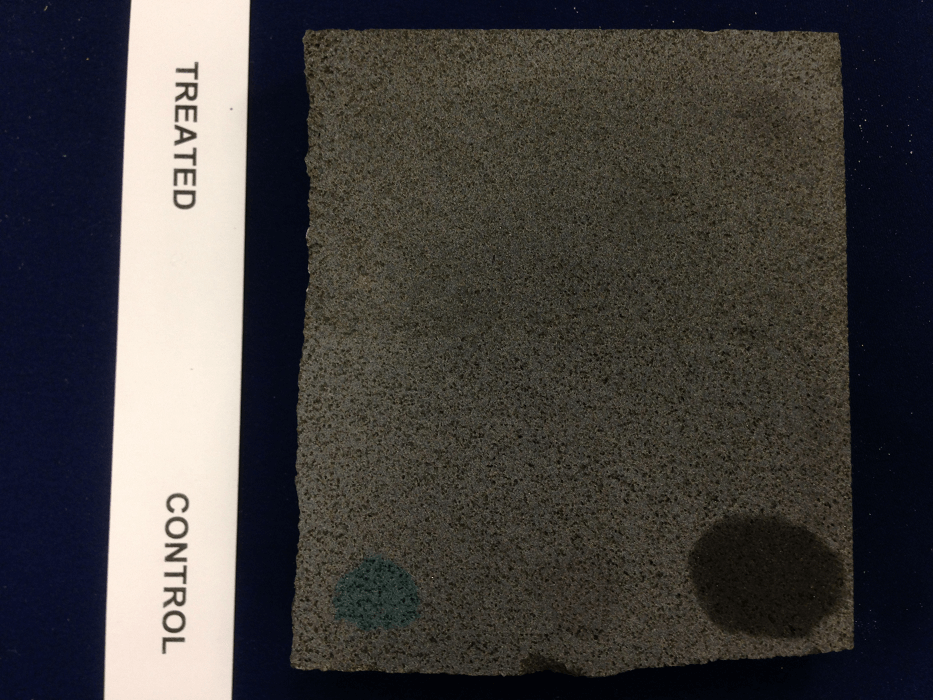
Stains (food dye, red wine, and olive oil) were equally placed as a droplet onto the surfaces of both treated and control surfaces in an order of food dye (left), red wine (centre) and olive oil (right). After approximately 10 minutes, the stains were removed and the surfaces were washed with a dishwasher detergent and nylon brush under running tap water. The substrates were then allowed to dry before the surfaces were visually examined for staining. The results are shown in the photos below. The photos on the left were taken after the staining materials were placed onto the surfaces. The top part was the treated part while the bottom was the control. The photos on the right were taken after the stains were removed and surfaces were washed and dry.
Pressed Concrete Paver
Being a permeable substrate, the stains were immediately absorbed by the pressed concrete after being placed onto the surface. In contrast, the stains remained as beadings on the treated surface. After the stains were removed and was washed and dry, the untreated surface was significant stained while the treated part showed almost no stains. The result indicates that Polishing Liquid provided significant stain resistance to the pressed concrete.
Pressed Concrete Paver
Being a permeable substrate, the stains were immediately absorbed by the pressed concrete after being placed onto the surface. In contrast, the stains remained as beadings on the treated surface. After the stains were removed and was washed and dry, the untreated surface was significant stained while the treated part showed almost no stains. The result indicates that Polishing Liquid provided significant stain resistance to the pressed concrete.
Stain application Stains removed, washed and dry
Being a permeable substrate, the stains were immediately absorbed by the pressed concrete after being placed onto the surface. In contrast, the stains remained as beadings on the treated surface. After the stains were removed and was washed and dry, the untreated surface was significant stained while the treated part showed almost no stains. The result indicates that Polishing Liquid provided significant stain resistance to the pressed concrete.
Imported Sandstone
Sandstone is also a permeable substrate and the results were similar to that of the pressed concrete paver. The test shows that Polishing Liquid provides a good stain resistance to the sandstone.
Imported Granite
Granite is a dense natural stone with low water absorption. Although there is no immediate absorption for the untreated surface but the surface was significantly stained after the staining test. In contrast, the treated part showed almost no stains. This indicates that Polishing Liquid provides significant stain resistance to the granite.
Imported Bluestone
Bluestone is a very dense masonry substrate showing limited water absorption but still affected by staining. The results confirmed that Polishing Liquid provided good stain resistance to this dense bluestone. It is noticed that Polishing Liquid provided better resistance to water-based stains than that of oil-based stain.
Use Instructions
Read the product information before application.
Do not apply the sealer if extreme weather is expected. Make sure the surface is dry, firm, and free from grime, oil, and any previous coatings. Fill all cracks and allow them to cure before application. Because masonry materials vary, you must carry out a test patch to confirm the product is suitable for your surface.
Always stir or shake the product before use
Polishing Liquid can be also applied using brush, roller or low-pressure hand spray. The initial treated surface should have a mirror-like wet film appearance. When the first coat absorbs into the surface, apply the second coat immediately. This wet‑on‑wet method ensures the surface absorbs enough material for deep penetration. Remove any liquid that remains on the surface after 10 minutes to prevent excess sealer from pooling and creating an uneven finish.
The number of applications depends on the permeability of the substrate. Two coats are enough for general substrate but more coatings may be required for porous substrate.
The consumption of Polishing Liquid varies significantly in an order of 2-20 m2per litre per coat depending on the permeability of the substrates orcould be out of this range significantly.
The initial oil/water repellent effect may develop after the surface is dry. Full curing may take up to 7 days. Avoid heavy traffic for at least 24 hours. Wash the equipment inwater.
Typical Data
- Appearance: white emulsion
- Specific Gravity: approx. 1 g/ml at 20 oC
- pH value: approx. 7-9
- Solubility in water: miscible in water
- VOC content: nil
Important Note
Polishing Liquid penetrates into the capillaries and renders the surface oil/water repellent while still leaving the capillaries open to allow vapour to breath. Therefore, prolonged contact of water or stains with the surface can still cause absorption and staining due to the open capillaries. Therefore, it is strongly recommended that stains should be removed from the contaminated surfaceas soon as possible to avoid possible permanent staining. The sealer will not prevent surface etching or wearing. Polishing Liquidwill make the maintenance and cleaning of a treated surface easier. General cleaning is applied for removing stains. Harsh cleaning should be avoided.
Handling & Storage
Polishing Liquid is a water‑based, non‑hazardous product. However, you should still follow good industrial hygiene practices when using it. Store the product in closed containers in a cool, dry place, away from heat or fire sources. The product has a shelf life of 6 months in a sealed container stored in a cool dry place away from fire or ignition sources at a temperature below 25oC.
Keep out of reach of children
Use with sufficient ventilation away from fire or ignition sources
Packaging
Available in 1, 5, 20, 200 & 1000 litre plastic drums.