
- Home
- Products
- Rising Damp Treatment: Fixing Rising Damp
- Damp Course Fluid

Description
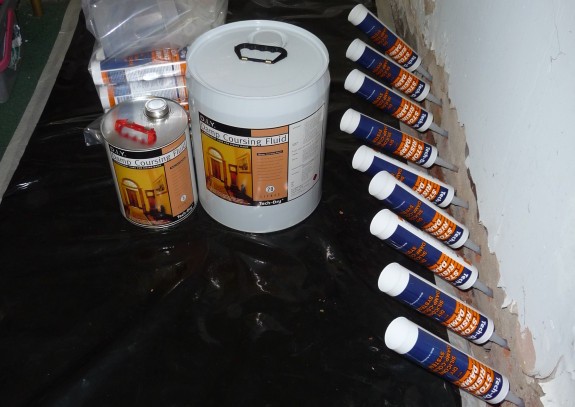
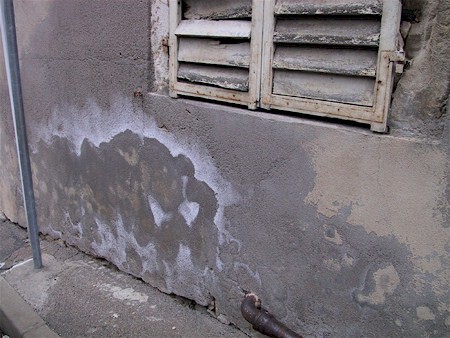
Damp Course Fluid (DCF) is a silane/siloxane-based impregnant specifically formulated to permeate into wet walls. Once impregnated into a course of brickwork it reacts with the minerals present to form a durable polysiloxane damp course which permanently stops rising damp. It was developed and tested at the Victoria University of Technology Building Protection Science Unit.
Recommended Uses
Damp Course Fluid is used to install a durable polymer damp course into brick work or other masonry walls to permanently stop rising damp.
Installers across Australia have trusted it in more than 10,000 successful damp‑course installations, protecting domestic, commercial, and heritage buildings with long‑lasting performance.
Key Features
- Penetrates deeply into bricks, mortar and other masonry substrates.
- Forms polysiloxane damp course permanently bonded within the substrates.
- UV, alkali stable and durable formulation.
- Reduces water penetration, salt migration and other water-borne staining.
- Non-dangerous, non-corrosive and non-toxic formulation.
- Easy application and cost effective.
Use Instructions
A Tech-Dry damp course can be installed either commercially by an authorised Tech-Dry technician, or by an easy to use “Do-It-Yourself” method. Contact the Tech-Dry office in your state for commercial installation.
Please read the product information for the correct application and safe handling. The following application instructions are for Do-It-Yourself application. Please refer to a separate booklet called “DIY Damp Coursing Application Instructions” for details.
Conduct a test on the masonry before application to confirm that the product suits the specific wall conditions.
- Carefully remove any skirting boards present to reveal lowest course of bricks.
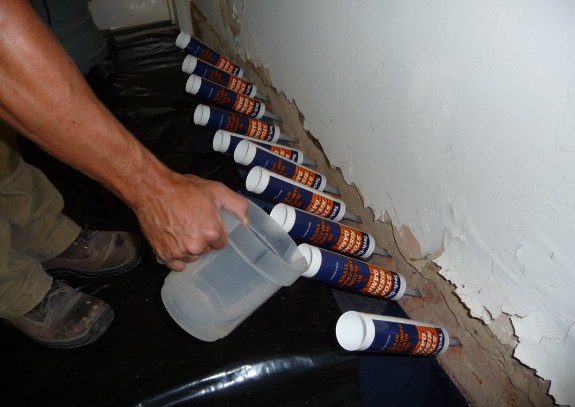
- Drill two blind holes in each brick using a sturdy hammer drill, and then fill with DCF using Tech-Dry damp course DIY application kit.
- Once the DCF has saturated the bricks in a complete horizontal layer, the new damp course is installed and the wall above the damp course will begin to dry out.
- Do not splash DCF onto any area you do not wish to treat. If splashing occurs the product should be removed with a cloth damped in a solvent such as mineral turpentine immediately.
- Equipment can be washed in mineral turpentine.
Drying out of the wall after damp course installation
The new damp course will permanently stop the rising damp. The water already present in the wall above the damp course starts evaporating as soon as you install the damp course. The treated wall should be let to dry for up to 6 months before any rendering or plastering is carried out. We strongly advise to leave the old render or plaster on the wall during this drying period as the old surface finish acts as a poultice and draws out the rising damp salts which are present.
Re-rendering and re-plastering of the wall
Most damp walls are salt affected and the plaster or render will never recover. The salts within the surface tend to absorb moisture from the atmosphere making the render or plaster feel or look wet. It is therefore a waste of time or money patching and painting the old render. The salts will bleed through the new paintwork and destroy the new finish. It is therefore important to re-render or re-plaster the wall as shown below:
- Remove all salt contaminated render and plaster to show bare bricks to a height of 300mm above the last visible signs of dampness.
- The exposed brickwork should be wiped with a damp cloth to remove any residual salts. This should be repeated twice allowing one day between wiping’s. Repeat the full process every three weeks until no further salt appears.
- Apply cement/sand render finish containing a salt retarding admixture. An ideal admixture is Tech-Dry Salt Retarder. The inclusion of this admixture inhibits the migration of residual salts through the new render.
- Do not extend this render behind the skirting boards, that is, batten the skirting away from the wall with the top of the skirting meeting the bottom of the plaster.
- Apply base coat of render. When set, finish with hard plaster.
- Avoid using plasterboard because it offers very little resistance to residual salts in the walls. If you choose a plasterboard finish, use treated pine battens or a rubber‑based adhesive. Do not use normal cornice adhesive.
Consumption Rate
The DIY consumption rate of DCF is about 1.5 litres per lineal meter of single brick wall. However, this rate varies significantly depending on the permeability of the substrate and conditions of buildings.
Typical Data
- Appearance: Colorless liquid with hydrocarbon solvent odor
- Solids content: <50% by weight
- Specific Gravity: 0.79g/ml at 20 oC
- pH value: Not allocated
- Solubility in water: Insoluble in water
- VOC content: >50%
- Flash point: >38 oC
Important Note
Conduct a pilot test on a small on‑site area before application to confirm that the product suits the specific building materials. Contact the Tech‑Dry office if you need further information.
Handling & Storage
DCF is a hazardous and flammable material. Refer to the material safety data sheet for safe application and handling. Follow good industrial hygiene practices when using this product. Avoid vapour inhalation and skin or eye contact by wearing appropriate protective equipment. Use an air‑purifying respirator if exposed to high vapour concentrations. Wash your hands after handling. Store the product in closed containers in a cool, dry place away from fire or ignition sources. Keep it sealed below 25°C to maintain its 12‑month shelf life.
Use under sufficient ventilation away from any fire or ignition sources
Keep out of reach of children
Packaging
Available in 5, 20 and 200 litre metal drums.